
Easy Ways to Safeguard You and Your Money

Have you ever noticed an unauthorized withdrawal from your bank, brokerage, or credit card account? Such suspicious activity can mean only one thing: Your finances have been invaded.

If this has happened to you, know you are not alone. According to a November, 2019 Nilson Report, “Credit card fraud losses in 2018 reached $27.85 billion.

The good news is that if you find yourself the target of financial fraud, there are steps you can take to limit losses and help prevent unauthorized activity from happening again.


1. Act fast

  • It’s in everyone’s interest to identify suspicious activity as soon as it surfaces. Your financial institution can freeze the compromised account, issue a new card, reset a password, and perhaps even help track down those responsible. Be sure to initiate contact through a known number or website; never respond to an unsolicited email, phone call, or text—no matter how legitimate it may seem.
  • Financial institutions generally have security policies that outline how they handle fraud—including your liability, if any, in the event of unauthorized activity.
  • Viruses and malware are commonly tied to fraud schemes. Indeed, if a virus is left unchecked it can capture your new username and password, even if it was changed after the initial breach.

2. Go wide

Password.jpg
  • Whenever you spot fraud in one account, change the credentials on any other accounts with the same usernames and/or passwords. Better yet, assign a unique password to each financial account, as well as every site where you store bank account or credit card information.
  • Of course, it can be difficult to keep all those passwords straight. Password managers, such as Dashlane and LastPass, can generate a unique password for every account, keep track of them all, and even securely auto-populate username and password fields.

3. Stay Alert

  • In addition to fraud alerts, many credit card issuers can notify you when they process online or over-the-phone transactions that don’t require a physical card. In 2018, such transactions accounted for 54% of all fraudulent activity worldwide involving credit, debit, and prepaid cards. Bank and brokerage accounts also offer alerts and notifications for certain types of transactions.
  • Regularly review your statements and credit report to ensure no fraudulent activity flies under the radar. Each of the three major credit reporting agencies (Equifax, Experian, and TransUnion) is required to provide one free credit report annually, so consider requesting a report from one of the agencies every four months.
  • Placing a security freeze with Experian, TransUnion, or Equifax can prevent others from opening a new credit card or loan in your name. Better yet, place a freeze with all three agencies to ensure maximum protection. If you need to apply for credit in the future, you can temporarily lift the freeze using a password or PIN.

4. Double up

biometric acces.jpg
  • Activate two-factor authentication: This safeguard, now standard among financial firms, issues a single-use code via email or text that you need to enter along with your username and password to gain access to your account.
  • Enable biometric recognition: Biometrics let you unlock a device or log in to an account with your face, fingerprint, or voice. Unlike passwords, biometrics can’t be written down (or lost) and are much harder for criminals to replicate.

Go the extra mile

In addition to the above four steps, consider reporting your experience to TheFederal Trade Commission. The agency’s reporting process isn’t designed to resolve individual incidents or recover funds, but your report helps them track trends in fraud and better understand the methods criminals are using, which may help financial firms improve their defenses.

It’s also a good idea to file an Identity Theft Report at identitytheft.gov. This entitles you to extra protections, such as placing an extended fraud alert on your credit report and preventing companies from collecting debts that result from identity theft.

Summer Jobs and Tax Returns

If your child picks up a summer job, they may or may not be required to file a federal tax return and/or pay federal taxes. It all depends on the type of job and how much they earn. The charts below provide some simple guidelines.


These tables are for general informational purposes only. They address only federal filing requirements for earned income. Other federal filing requirements may apply; see  IRS Publication 929  for more details.
THESE TABLES ARE FOR GENERAL INFORMATIONAL PURPOSES ONLY. THEY ADDRESS ONLY FEDERAL FILING REQUIREMENTS FOR EARNED INCOME. OTHER FEDERAL FILING REQUIREMENTS MAY APPLY; SEE IRS PUBLICATION 929 FOR MORE DETAILS.

Even if your child is not required to file a federal tax return, it’s wise to consult with your financial planner or tax advisor, as he or she may be due a tax refund. And be sure to include your child in that consultation and any filling that may result. It’s never too early to start young wage earners on the road to financial literarcy—-teaching them the significance of taxes and and the ramifications of not managing them correctly.


This blog was excerpted from a Charles Schwab Personal Finance and Planning online post.

Refinancing Your Home. Good Idea or Risky Gamble?

The current low interest rates can make it a great time for some homeowners to refinance. What’s important to note is that changes in interest rates affect fixed and adjustable mortgages differently.

While adjustable rate mortgages may be affected by short-term rate changes, fixed mortgage rates tend to be more closely aligned with the 10-year Treasury note.

If you have an ARM, a decrease in the short-term federal funds rate may lower your rate. If you have a fixed-rate mortgage, you should instead pay attention to long-term bonds like the 10-year Treasury note

Rates aside, deciding whether or not to refinance depends on a number of personal factors.


WHAT’S YOUR GOAL?
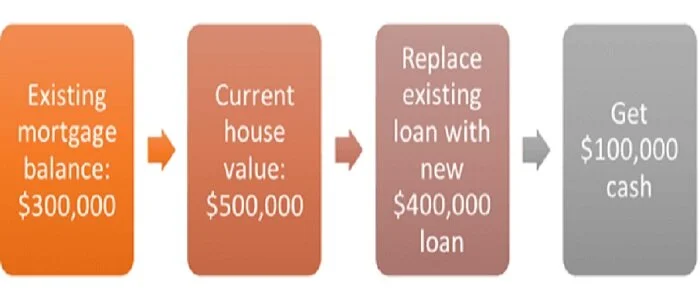
purpose of mortgage refinance.jpg

Do you want to lower your monthly payment? Reduce the length of your mortgage? Take out extra money for home improvements? These are important initial questions.

If decreasing your payment is a top priority and you can lower your interest rate by .5 to 1 percent, it’s probably worth the effort. For instance, lowering the interest rate on a $350,000 30-year fixed mortgage by 1 percent could lower your monthly payment by about $300 a month.

On the flip side, if your goal is to shorten the length of your mortgage and you refinance that amount for 15 years, your monthly payment would go up, but you’d save a considerable amount in interest over the life of the loan.

HOW LONG WILL YOU BE IN THE HOUSE?

Refinancing usually involves paying points and fees. Points basically represent interest you pay upfront to get a lower rate on your loan. It’s not uncommon for points and fees to add up to 3-6 percent of your loan. You can pay this out of pocket or, often times, add them to the balance of your loan.

However you pay them, it will take time to get to the breakeven point where these additional costs are offset by the lower rates, so you have to think realistically about how long you intend to be in your home. If you plan to sell in the near future, the extra cost of refinancing may outweigh the monthly short-term savings.

Ben Franklin House.jpg

HOW MUCH HOME EQUITY DO YOU HAVE? 

Do you want to lower your monthly payment? Reduce the length of your mortgage? Take out extra money for home improvements? These are important initial questions.

If decreasing your payment is a top priority and you can lower your interest rate by .5 to 1 percent, it’s probably worth the effort. For instance, lowering the interest rate on a $350,000 30-year fixed mortgage by 1 percent could lower your monthly payment by about $300 a month.

On the flip side, if your goal is to shorten the length of your mortgage and you refinance that amount for 15 years, your monthly payment would go up, but you’d save a considerable amount in interest over the life of the loan.

DO THE MATH

Refinancing usually involves paying points and fees. Points basically represent interest you pay upfront to get a lower rate on your loan. It’s not uncommon for points and fees to add up to 3-6 percent of your loan. You can pay this out of pocket or, often times, add them to the balance of your loan.

Mortgage REfinance.jpg

However you pay them, it will take time to get to the breakeven point where these additional costs are offset by the lower rates, so you have to think realistically about how long you intend to be in your home. If you plan to sell in the near future, the extra cost of refinancing may outweigh the monthly short-term savings.

Refinancing usually involves paying points and fees. Points basically represent interest you pay upfront to get a lower rate on your loan. It’s not uncommon for points and fees to add up to 3-6 percent of your loan. You can pay this out of pocket or, often times, add them to the balance of your loan.

However you pay them, it will take time to get to the breakeven point where these additional costs are offset by the lower rates, so you have to think realistically about how long you intend to be in your home. If you plan to sell in the near future, the extra cost of refinancing may outweigh the monthly short-term savings.


This post was excerpted from an online article by Carrie Schwab-Pomerantz, Board Chair and President, Charles Schwab Foundation, Senior Vice President, Charles Schwab & Co., Inc. and Board Chair, Schwab Charitable